The role of 3D modeling in residential design planning sets the stage for this enthralling narrative, offering readers a glimpse into a story that is rich in detail and brimming with originality.
Exploring how 3D modeling revolutionizes the way architects and designers bring their ideas to life, this topic delves into the transformative impact of technology on the creative process.
The importance of 3D modeling in residential design planning
D modeling plays a crucial role in residential design planning by enhancing the visualization of design concepts, facilitating effective communication with clients and team members, and improving the overall efficiency of the design process.
Enhanced Visualization of Design Concepts
- 3D modeling allows designers to create realistic and detailed representations of their ideas, providing clients with a clear understanding of the final outcome.
- By visualizing the design in 3D, stakeholders can better evaluate different options, make informed decisions, and ensure that the design meets their expectations.
- Using 3D models, designers can experiment with various elements such as materials, colors, and textures, helping to refine the design before construction begins.
Effective Communication with Clients and Team Members
- 3D models serve as powerful tools for communication, enabling designers to convey their ideas accurately and engage clients in the design process.
- Clients can easily grasp the proposed design through 3D models, leading to more productive discussions, feedback, and collaboration between designers and clients.
- Team members involved in the project can also benefit from 3D models by visualizing the design as a whole, understanding spatial relationships, and coordinating their efforts more effectively.
Improved Efficiency of the Design Process
- With 3D modeling, designers can streamline the design process, reduce errors, and identify potential issues early on, saving time and resources in the long run.
- Changes and revisions can be made quickly and easily in 3D models, allowing designers to adapt to feedback and evolving requirements without significant disruptions to the project timeline.
- 3D modeling also facilitates better coordination between different disciplines involved in the design process, leading to smoother workflows and more integrated design solutions.
Tools and software used in 3D modeling for residential design
When it comes to 3D modeling for residential design, there are several software programs that architects and designers rely on to bring their vision to life. These tools offer a range of features and functionalities tailored to the needs of architectural visualization.
Popular software programs for creating 3D models in residential design
- Autodesk Revit: Known for its Building Information Modeling (BIM) capabilities, Revit is widely used in the architecture industry for creating detailed and accurate 3D models.
- SketchUp: A user-friendly software that allows for quick and easy creation of 3D models, making it popular among beginners and professionals alike.
- 3ds Max: This software is known for its powerful rendering capabilities, making it ideal for creating photorealistic visuals of residential spaces.
- Blender: An open-source software with a strong community of users, Blender offers a wide range of features for 3D modeling, animation, and rendering.
Features and functionalities of these tools for architectural visualization
- Autodesk Revit: Integrated BIM features for collaborative design, parametric modeling for efficient changes, and detailed documentation for construction.
- SketchUp: Intuitive interface, easy-to-use tools for modeling, and a vast library of extensions for additional functionalities.
- 3ds Max: Advanced rendering options, support for third-party plugins, and compatibility with other Autodesk software for seamless workflows.
- Blender: Flexible modeling tools, powerful animation capabilities, and a node-based material editor for realistic textures and lighting.
Comparison based on ease of use, rendering capabilities, and compatibility
| Software | Ease of Use | Rendering Capabilities | Compatibility |
|---|---|---|---|
| Autodesk Revit | Intermediate to Advanced | Good | Strong integration with other Autodesk software |
| SketchUp | Beginner to Intermediate | Basic to Moderate | Support for various file formats |
| 3ds Max | Advanced | Excellent | Seamless integration with other Autodesk products |
| Blender | Intermediate to Advanced | Advanced | Open-source with compatibility across platforms |
Integration of 3D modeling with other design aspects
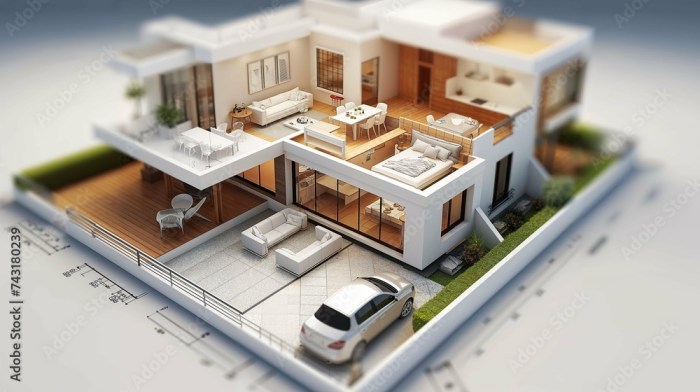
D modeling plays a crucial role in various stages of residential design planning, including drafting, material selection, and interior design. It offers architects and designers the opportunity to collaborate effectively with engineers, contractors, and clients. Furthermore, 3D modeling allows for accurate measurements and assessment of spatial relationships within residential design projects.
Integration with Drafting and Material Selection
D models are seamlessly integrated into the drafting process, providing a visual representation of the design that aids in communicating ideas effectively. Architects and designers can use 3D models to experiment with different materials, textures, and finishes, enabling them to make informed decisions during the material selection phase.
Collaboration with Engineers, Contractors, and Clients
Architects and designers often use 3D modeling to collaborate with engineers and contractors, allowing all parties to visualize the project from various perspectives and identify potential issues early on. Additionally, 3D models are shared with clients to provide a clear understanding of the design concept, leading to better communication and alignment of expectations.
Role in Accurate Measurements and Spatial Relationships
D modeling is instrumental in creating accurate measurements within residential design projects, ensuring that dimensions are precise and consistent throughout the design process. By visualizing spatial relationships in 3D, architects and designers can optimize layouts, circulation paths, and furniture placements to enhance functionality and aesthetics.
Advantages of using 3D modeling in residential design planning
D modeling offers numerous advantages in residential design planning, enhancing the overall process and outcomes. By utilizing 3D modeling, designers and clients can benefit from improved visualization, early error detection, and sustainable design practices.
Virtual walkthroughs and renderings for visualization
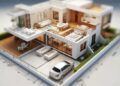
- 3D modeling allows designers to create realistic virtual walkthroughs and renderings of the final residential design, helping clients visualize the project before construction begins.
- These visualizations provide a more immersive experience, enabling clients to better understand the spatial layout, design elements, and overall aesthetic of their future home.
Identifying design flaws and making early modifications
- Through 3D modeling, designers can identify potential design flaws, inconsistencies, or issues early in the planning phase, saving both time and resources.
- By visualizing the design in a 3D environment, designers can make necessary modifications efficiently, ensuring a more seamless construction process and final result.
Supporting sustainable design practices
- 3D models facilitate the simulation of energy efficiency and material usage, allowing designers to optimize the design for sustainability and environmental impact.
- By analyzing the 3D model, designers can explore different scenarios and solutions to enhance the overall sustainability of the residential design, promoting eco-friendly practices.
Final Thoughts
As we conclude this exploration of the role of 3D modeling in residential design planning, it becomes evident that embracing this innovative tool is crucial for achieving efficiency, precision, and enhanced collaboration in the realm of architecture and design.
FAQ Section
How does 3D modeling enhance visualization of design concepts?
3D modeling provides a realistic representation of design ideas, allowing for better understanding and visualization of spatial relationships.
What are the popular software programs used for creating 3D models in residential design?
Some popular software programs include AutoCAD, SketchUp, and Revit, each offering unique features tailored to architectural visualization.
How does 3D modeling support sustainable design practices?
By simulating energy efficiency and material usage, 3D modeling enables designers to optimize resources and create environmentally friendly residential spaces.